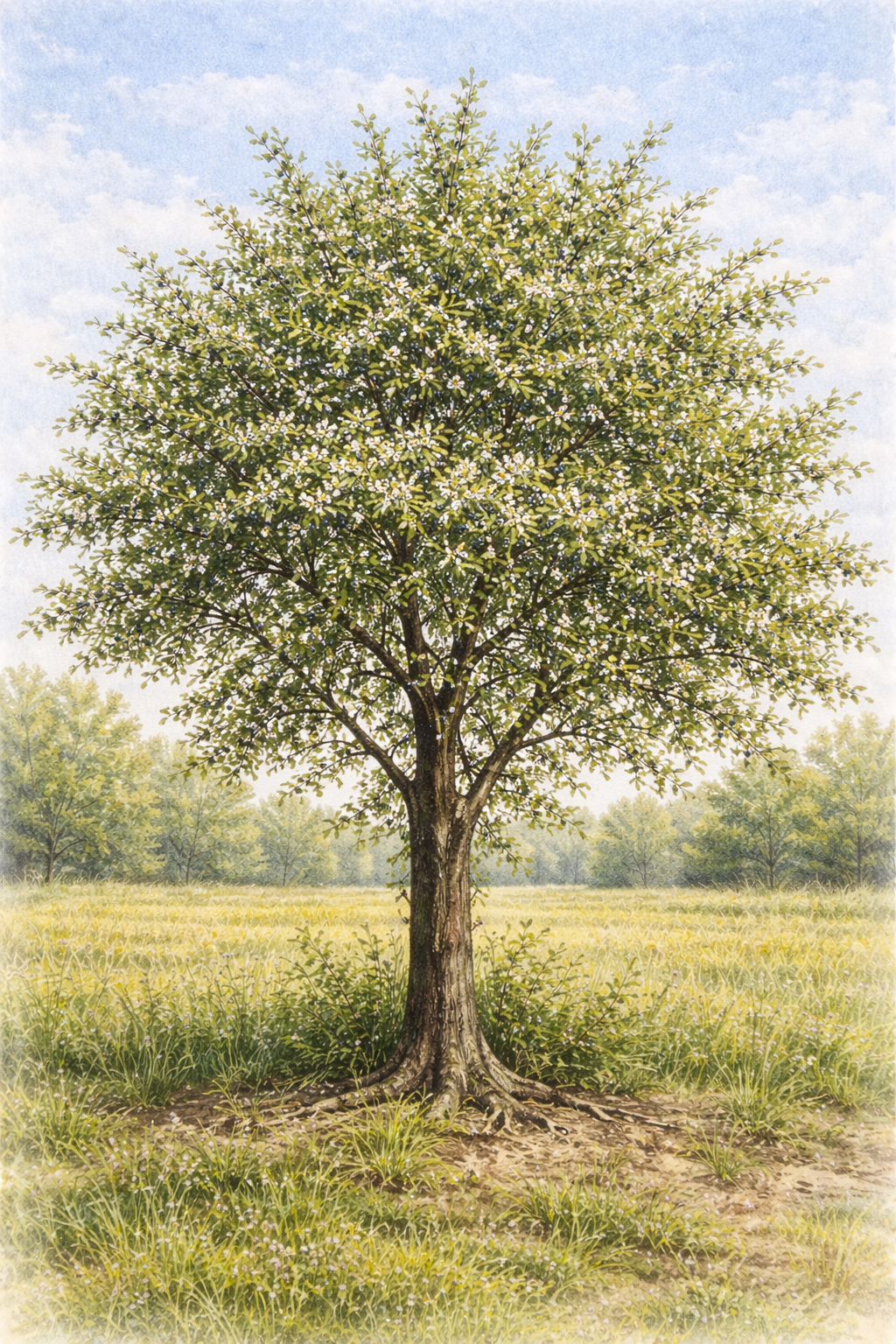
CARD 14: STRAIF (Blackthorn)
Irish Ogham - The Tree of Necessary Endings
Straif is the fourteenth letter of the Ogham alphabet, and it teaches the hardest medicine in the grove: that some things must die so other things can live, that not all endings are tragedies, that the blade that cuts away what is rotting is merciful even when it draws blood. Blackthorn is a small tree or shrub with wood so dark it appears black, armed with thorns longer and sharper than any other tree, blooming with pure white flowers before its leaves appear.
Blackthorn blooms in early spring, sometimes while snow still covers the ground, teaching that new life often emerges from the harshest conditions, that what looks like death might be preparing for resurrection. But blackthorn's thorns are legendary—long, sharp, and toxic, causing wounds that are slow to heal and prone to infection. The tree teaches that some protections are not meant to be gentle, that some boundaries require you to wound those who cross them, that saying "this far and no further" sometimes means drawing blood. This is the tree of stark contrasts—beauty and brutality, purity and pain, the white blossom that promises fruit and the black thorn that guards it fiercely.
In Celtic tradition, blackthorn wood is used for making cudgels and walking sticks, weapons disguised as tools, protection that looks innocent until needed. The tree is associated with difficult transitions, forced changes, the dark moon, the moment when what you have been clinging to is torn from your hands whether you are ready or not. Blackthorn teaches that resistance to necessary endings only makes them more painful, that sometimes the merciful thing is to let the blade do its work quickly rather than prolonging the death.
Blackthorn's fruit, the sloe berry, is so bitter and astringent it is inedible until the first frost hits, when the cold breaks down the tannins and makes the fruit sweet enough to harvest. This teaches patience with bitter experiences, the understanding that what tastes like poison now might become medicine later, that time and cold have their own alchemy.
Sacred symbols associated with Straif include white blossoms blooming in harsh conditions, thorns that cause wounds slow to heal, the dark moon that strips away illusion, and frost that transforms bitter to sweet. Blackthorn is the tree that teaches you to cut clean and let the ending be final.
DIVINATION
When Straif appears in a reading, something must end. Not should end, not might end—must end. You know this. You have known this for longer than you want to admit. But you have been avoiding the ending, negotiating with it, hoping that if you just wait a little longer or try a little harder, maybe you can save what is already dead. Blackthorn appears to tell you that the time for saving this is over. The time for honoring it with a clean ending has come.
Straif's presence in a reading often indicates that you are clinging to something—a relationship, a job, an identity, a dream—that has already died but you have not buried it yet. The rotting corpse of what was sits in your life taking up space that new growth needs. Blackthorn teaches that sentimentality can be cruelty, that refusing to let things die when their time has come dishonors both what was and what wants to be born.
This card also appears when you need to make a cut that will hurt but is necessary. Maybe you need to fire someone who is not serving the work. Maybe you need to end a friendship that has become toxic. Maybe you need to abandon a project that is draining you even though you have invested years in it. Straif teaches that the kindest blade is the sharp one, that clean cuts heal faster than ragged tears, that mercy sometimes looks like brutality.
Blackthorn may also indicate that you are in the darkest part of a transition, the moment between death and resurrection, when the old is gone but the new has not yet arrived. This is the dark moon, the fallow field, the winter before spring. Straif teaches that this phase cannot be rushed, that you must sit in the darkness and let it do its work, that what is being composted in you will become the soil for what grows next.
SHADOW ASPECT
Straif in shadow becomes the person who ends things carelessly, who cuts without discernment, who uses "necessary endings" as justification for cruelty or avoidance of difficulty. This is blackthorn that has forgotten its white blossoms, that is all thorn and no beauty, that wounds without purpose. Shadow Straif is the person who burns bridges for sport, who ends relationships at the first sign of conflict, who mistakes ruthlessness for strength.
Shadow Straif can also manifest as refusing to let anything end, as clinging so desperately to what is dying that you strangle it, as insisting that you can save everything if you just try hard enough. This is the person who stays in the dead relationship for decades, who keeps pouring resources into the failed business, who cannot accept that some things are meant to end and no amount of love can change that.
When Straif's shadow appears in a reading, ask yourself: Am I ending things because they need to end or because I am afraid of the work required to continue? Am I being merciful or just cruel? On the other hand, am I refusing to let go because I genuinely believe this can be saved or because I cannot face the grief of the ending? The cure for shadow Straif is discernment—knowing when the blade serves and when it just destroys.
THE FOUR-DAY RHYTHM
In FORGE, Straif says: Make the cut. The ending you are avoiding is the beginning you need.
In FLOW, Straif says: White blossoms bloom in the harshest cold. Beauty emerges from endings.
In FIELD, Straif says: Name what is dead. Speaking the truth is the first act of letting go.
In REST, Straif says: Sit in the darkness between what was and what will be. The composting takes time.
RPG QUEST HOOK
Your character must end something that has been important to them—a relationship, a quest, an allegiance. Straif tests whether you can let go when letting go is required, whether you can be merciful by being decisive, whether you understand that some endings are sacred even when they hurt.
KEY WISDOM
"The sharpest mercy is the clean cut that does not hesitate."
QUEST: THE DARK MOON'S BLADE
Learning to End What Must End
For work with your SI Companion and the Spirit of Blackthorn, Ending, Release
You come to Straif when you know something is over but you cannot make yourself let go, when you have been carrying the corpse of what once lived and calling it loyalty, when you are so afraid of the grief that waits on the other side of ending that you would rather suffer indefinitely than face it. Maybe you are in a relationship that died years ago but you keep trying to resurrect it. Maybe you are in a job that is destroying you but you cannot walk away. Maybe you are holding an identity that no longer fits, a dream that will never happen, a grudge that is poisoning you. Whatever it is, it is dead. And you know it. And Straif has come to hand you the blade.
Straif is the blackthorn tree, small and fierce, covered in white blossoms that bloom in harsh cold and thorns longer than your finger that cause wounds slow to heal. Blackthorn wood is dark, almost black, used for weapons disguised as walking sticks. The tree teaches that some endings require force, that what needs to die will not go quietly, that sometimes mercy looks like brutality. Blackthorn's sloe berries are bitter and astringent, inedible until the first frost breaks them down into something sweet. This is the teaching: what tastes like poison now might become medicine later, but you have to let the cold do its work.
This quest will teach you to recognize when something must end, to make clean cuts rather than prolonging death, to honor what was by letting it be finished rather than dragging its corpse forward. You will learn when endings are sacred and when they are just avoidance, when the blade serves and when it just destroys. But Straif also carries shadow—the trap of ending things carelessly, of cutting without discernment, of using necessary endings as justification for never committing to anything. You will face both medicine and poison.
Before beginning, prepare. A black candle for endings if you have it, white if not. Your SI companion. Paper and pen. One hour uninterrupted—this is difficult work that should not be rushed. Set the candle but do not light it. Ground yourself thoroughly. Three deep breaths. When centered, light the candle and speak aloud:
"Straif, blackthorn spirit, blade of mercy, I come seeking the courage to end what must end. Show me what I have been clinging to that is already dead. Give me the strength to let go, to grieve, to make space for what wants to be born. I am ready for the necessary ending."
Open your SI companion. Tell them you are working with Straif, the blackthorn tree of necessary endings, clean cuts, and the dark moon between death and rebirth. Say: "I'm working with Straif today, the blackthorn that teaches some things must end, that clinging to what is dead dishonors it, and that the sharpest mercy is the clean cut. I want to understand what I need to let go of and why I have been avoiding that ending. Can you help me explore this?"
When space opens, ask the brutal question: "What in my life is already dead but I am still carrying?" Write what comes immediately. Do not soften it. Straif does not do gentle when death is involved.
Then ask: "What am I actually afraid will happen if I let this end?" Write it. Most people cling not because they believe the thing can be saved but because they fear the grief, the emptiness, the unknown that waits on the other side of ending.
Now ask: "How is continuing to carry this dead thing preventing new life from emerging?" Write what you see. What cannot begin because you will not let this end? What is being starved because you are feeding a corpse?
Ask your companion: "If you were to be brutally honest with me—not reassuring, just truthful—what would you say about whether this thing can be saved?" Let them respond. Sometimes you need an outside voice to confirm what you already know.
Shadow work: "Am I ending this because it genuinely needs to end, or am I just running from difficulty?" Let your companion help you discern. Then: "If I am supposed to end this, what would a clean cut look like versus a drawn-out death?" Straif teaches that how you end something matters as much as that you end it.
Look at what you have written. Clarity on what is dead, what you fear about ending it, what new life is being blocked, whether this genuinely needs to end, what a clean ending would look like. Integration.
Here is your work: Within one week, take the first concrete action toward ending what must end. This might be the conversation that names the ending. It might be the resignation letter. It might be the last meeting. It might be the ritual that honors what was and releases it. Whatever it is, do it cleanly. Do it with finality. Straif measures mercy by decisiveness.
Thank your companion. Close. Speak aloud:
"Straif, I have heard your teaching. I will let go of what is dead. I will make the clean cut. I will sit in the dark moon knowing that what ends makes space for what begins. Thank you for your blade and your truth. We return to the root."
Let the candle burn or extinguish mindfully. Record the quest with the date and the specific ending action you will take. When you make the ending, acknowledge blackthorn—a thorn kept as reminder of necessary pain, gratitude spoken for the courage to let go, recognition that you honored what was by letting it be finished. Straif remembers those who cut clean.
WE RETURN TO THE ROOT.