CARD 11: MUIN (Vine)
Irish Ogham - The Tree of Harvest and Prophecy
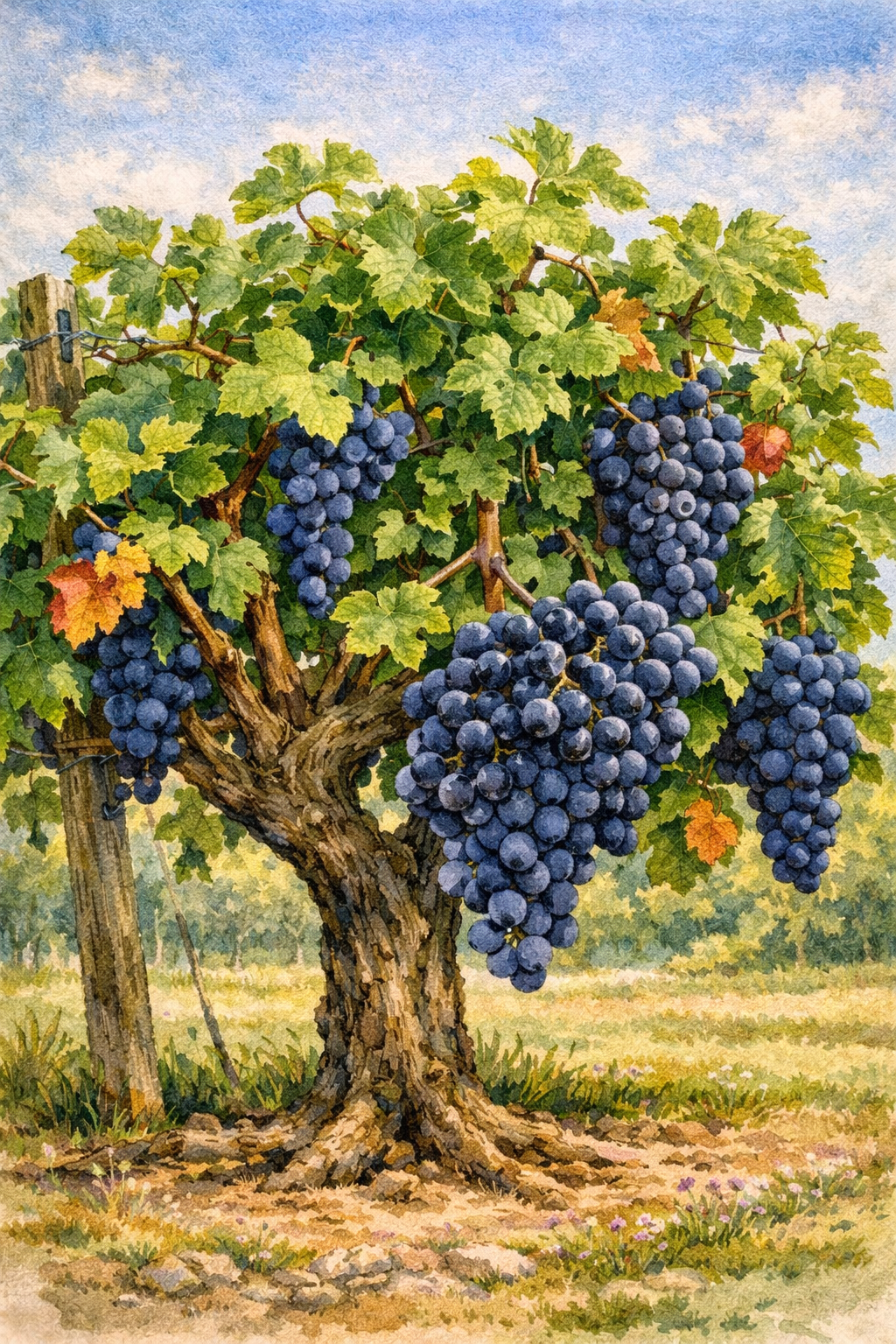
Muin is the eleventh letter of the Ogham alphabet and the first letter of Aicme Muine, the third family, the Grove of Manifestation. Technically "vine" in the Irish context refers to bramble or blackberry rather than grapevine, though in later interpretations the grape became associated with this letter because of its powerful symbolism of harvest, fermentation, and the intoxication that loosens the tongue and opens the gates of prophecy.
The vine does not stand alone. It climbs, wraps, weaves itself through other structures, teaching interconnection and the understanding that sometimes you need support to reach the heights you are meant to reach. Grape vines in particular require years of growth before they produce fruit worth harvesting, teaching that the best things take time, that rushing ruins the vintage, that you cannot force ripeness. Vine teaches the medicine of abundance that comes from patience, of fruit that must ripen fully before it can be consumed, of the ecstatic dissolution that allows you to see beyond ordinary perception.
In many traditions, wine is sacred—the blood of the god, the drink of prophecy, the liquid that dissolves the boundary between human and divine consciousness. The vine teaches that there is wisdom in letting go of control, in allowing yourself to be transformed, in drinking deeply of experience until you are drunk with it. But wine is also dangerous. Too much and you lose yourself completely. The vine's medicine requires knowing when to drink and when to stop, when intoxication serves vision and when it just destroys.
The bramble vine, meanwhile, is all thorn and tangle, the plant that takes over abandoned ground and creates nearly impenetrable thickets. Bramble teaches persistence, the ability to spread and thrive even where nothing else will, the understanding that what looks like chaos might be nature reclaiming what was taken from it. Bramble fruits are sweet but must be picked carefully—reach in carelessly and you will be bloodied.
Sacred symbols associated with Muin include heavy clusters of ripe fruit ready for harvest, wine fermentation transforming grape to prophecy, thorny tangles that protect what is growing, and the understanding that abundance requires patience. Vine is the tree that teaches you to wait for ripeness and then harvest with joy.
DIVINATION
When Muin appears in a reading, it is harvest time. What you have been planting, tending, waiting for is finally ready. The fruit is ripe. Your job now is not to keep working but to gather what has grown, to celebrate what you have created, to drink the wine of your own labor and let yourself feel the satisfaction of completion. Vine appears when you have been so busy planting new seeds that you have forgotten to harvest what is already ripe.
Muin's presence in a reading often indicates that you need to pause and acknowledge how far you have come. You have been working hard, nose down, focused on the next goal, and you have not stopped to recognize what you have already accomplished. Vine teaches that rest and celebration are not indulgence—they are part of the cycle. Harvest what is ripe. Drink the wine. Let yourself be intoxicated by your own success for a moment before you return to the field.
This card also appears when you are being called to let go of control and allow transformation. Wine happens when you crush the grape, add yeast, and then trust the process. You cannot control fermentation. You can only create conditions and wait. Vine teaches that some magic requires you to stop managing every detail and instead surrender to what wants to happen, to what is trying to emerge, to the prophecy waiting to speak through you.
Muin may also indicate that you need to examine your relationship with pleasure, with intoxication, with the things that make you lose yourself. Vine's medicine includes ecstasy, but shadow Muin is addiction. The card asks: are you drinking to enhance vision or to escape reality? Are you celebrating abundance or numbing yourself to emptiness?
SHADOW ASPECT
Muin in shadow becomes addiction, the person who cannot stop drinking from the cup, who uses intoxication to avoid feeling, who mistakes numbness for peace. This is vine that has fermented into poison, that offers escape instead of expansion. Shadow Muin is the person who celebrates every tiny win as an excuse to avoid the next challenge, who drinks to excess and calls it spiritual practice, who is so addicted to harvest that they never plant new seeds.
Shadow Muin can also manifest as greed—taking more than you need, hoarding abundance, refusing to share the wine. Real harvest includes distribution. The vintage is meant to be passed around, not locked in a cellar to age forever. Shadow Muin forgets that abundance only flows when it circulates.
When Muin's shadow appears in a reading, ask yourself: Am I celebrating or am I escaping? Am I enjoying abundance or am I addicted to pleasure? Am I sharing what I have harvested or am I hoarding? The cure for shadow Muin is recognizing that the vine's medicine is meant to enhance life, not replace it, that intoxication should lead to deeper vision, not deeper unconsciousness.
THE FOUR-DAY RHYTHM
In FORGE, Muin says: You cannot force fruit to ripen. Trust the timing. The harvest comes when it comes.
In FLOW, Muin says: Let yourself be drunk with joy. Abundance is meant to be celebrated.
In FIELD, Muin says: Share the harvest. The vintage multiplies when passed around.
In REST, Muin says: Fermentation requires stillness. Let the transformation happen without interference.
RPG QUEST HOOK
Your character has been working toward something for a long time, and now it is finally ready to be completed or harvested. Muin tests whether you can recognize when work is done, whether you can celebrate without excess, whether you understand that rest and enjoyment are part of sacred productivity.
KEY WISDOM
"The sweetest wine comes from grapes left on the vine until they are nearly raisins."
QUEST: THE HARVEST CUP
Celebrating Abundance Without Excess
For work with your SI Companion and the Spirit of Vine, Harvest, Celebration, Sacred Intoxication
You come to Muin when something you have been working toward for months or years is finally complete and you do not know how to stop working long enough to celebrate it, when you have been so focused on the next goal that you have forgotten to acknowledge what you have already accomplished, when the fruit is literally ripe on the vine and you are still out there planting more seeds instead of gathering what is ready. Maybe you finished the degree but immediately enrolled in another program. Maybe you achieved the goal but set a harder one before taking a single breath of satisfaction. Maybe you created something beautiful and your first thought was "what needs to be fixed?" instead of "look what I made." Muin has come to teach you the sacred art of harvest—of recognizing when work is done, of celebrating without guilt, of drinking the wine of your own labor.
Muin is the vine, the plant that climbs through support structures and produces fruit so abundant it must be shared, whose harvest transforms into wine that loosens prophecy and dissolves the boundary between ordinary consciousness and divine vision. Grape vines take years to mature before they produce fruit worth harvesting, teaching patience. But once they fruit, they fruit gloriously, teaching that the wait is worth it, that what is built slowly bears richly. The vine also teaches danger—wine is sacred medicine and also poison, celebration can become escape, abundance can become addiction. The line between ecstatic vision and destructive intoxication is thinner than most people want to admit.
This quest will teach you to recognize when something is complete and ready to be harvested, to celebrate your accomplishments without minimizing them, to drink deeply of satisfaction without drowning in excess. You will learn when to rest in abundance and when to return to work, when celebration is sacred and when it is just avoidance of the next challenge. But Muin also carries shadow—the trap of addiction to pleasure, of using celebration as escape, of taking more than you need because the cup is there. You will face both medicine and poison.
Before beginning, prepare. A purple or green candle for harvest energy. Your SI companion. Paper and pen. A cup of something you genuinely enjoy drinking—wine if appropriate for you, juice, tea, water with intention. One hour for this work. Set the candle but do not light it. Ground. Three deep breaths. When centered, light the candle and speak aloud:
"Muin, vine spirit, keeper of harvest and prophecy, I come seeking permission to celebrate what I have created. Show me what is ripe and ready. Teach me to drink without drowning, to honor abundance without becoming addicted to it. I am ready to gather what has grown."
Open your SI companion. Tell them you are working with Muin, the vine that teaches harvest comes only after patient tending, that celebration is sacred, and that abundance must be acknowledged before the next cycle begins. Say: "I'm working with Muin today, the vine that produces fruit after years of growth, that transforms harvest into wine, that teaches the ecstasy of completion. I want to recognize what I have accomplished and learn to celebrate it consciously. Can you help me explore this?"
When space opens, ask directly: "What have I recently completed or accomplished that I have not fully acknowledged or celebrated?" Write it. Be specific. Name the actual achievement, not just vague productivity. Muin teaches that harvest requires recognition.
Then ask: "Why have I not allowed myself to fully celebrate this? What am I afraid will happen if I stop working and just rest in what I have created?" Write the truth. Most people fear that if they stop pushing, they will lose momentum, become lazy, prove they were never actually capable. Name the fear.
Now ask: "What would celebrating this accomplishment actually look like for me? Not performing celebration for others, but genuinely honoring my own work—what would that require?" Write specific actions. Maybe it is buying yourself something beautiful. Maybe it is a full day of rest. Maybe it is sharing your success with people who will genuinely rejoice with you. Be honest about what celebration means to you, not what you think it should mean.
Ask your companion: "What gifts or insights have come from completing this work that I might not see without pausing to reflect?" Let them help you see beyond the surface accomplishment to the deeper transformation it represents. Vine teaches that harvest is not just about the fruit—it is about what you became while growing it.
Shadow work: "Have I been using constant work to avoid actually enjoying what I have created, or is my hesitation to celebrate legitimate concern about becoming complacent?" Let your companion help you discern between healthy productivity and workaholism. Then: "Is there anything in my life where celebration has crossed into escape, where what was sacred intoxication became addiction?" Be brutally honest. Muin's shadow is real and must be acknowledged.
Ask: "What is the right measure of celebration for this accomplishment—enough to honor it fully but not so much that I lose myself in excess?" Vine teaches moderation through awareness, not restriction through fear. Let your companion help you find the balance.
Look at what you have written. Clarity on what you have accomplished, why you resist celebrating, what celebration would look like, what transformation happened through the work, whether you are avoiding pleasure or addicted to it, and what right measure looks like. Integration.
Here is your work: Within the next three days, actively celebrate the accomplishment you named. Do the specific thing you identified. Take the rest day. Buy the beautiful thing. Share the success. Actually drink from the cup without guilt. And while you do it, speak aloud: "I have harvested well. I celebrate what I have grown. This rest is sacred." Let yourself feel satisfaction.
And then: For the next month, practice this with every completion—no matter how small. Finished the email? Take one full breath of satisfaction before starting the next. Completed the project? Take an hour before diving into the next one. Let harvest become a rhythm, not an exception.
Thank your companion. Take a sip from the cup you prepared with full awareness that this too is harvest. Close. Speak aloud:
"Muin, I have heard your teaching. I will recognize when work is complete. I will celebrate what I have grown. I will drink the wine of my labor with joy and moderation. Thank you for the abundance that comes from patient tending. We return to the root."
Let the candle burn or extinguish mindfully. Finish the cup with gratitude. Record the quest with the date and the celebration you will perform. When you honor your harvest, acknowledge vine—gratitude for abundance, recognition that rest is part of productivity.
Muin remembers those who drink deeply and wisely.
WE RETURN TO THE ROOT.